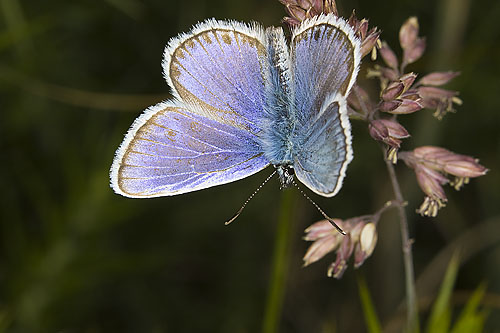
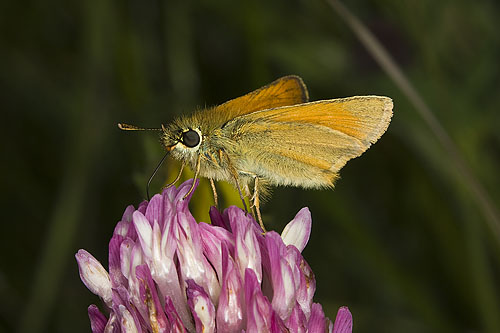
| Butterflies were still quite thin on the ground, even species such as Common Blue and Small Skipper were not particularly numerous... |
|
|
|
Common Blue (Polyommatus icarus) - Anglesey, Wales
|
|
|
|
Small Skipper (Thymelicus flavus) - Anglesey, Wales
|
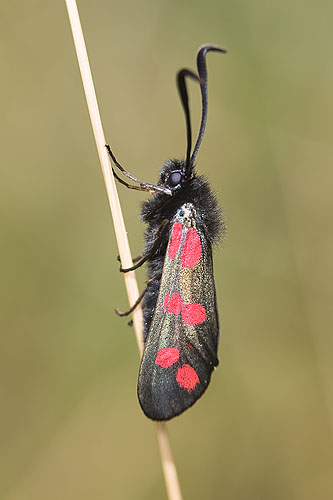
| 6-spot Burnet is one of the most common and conspicuous of the day-flying moths. |
 |
 |
|
6-spot Burnet (Zygaena filipendulae)
|
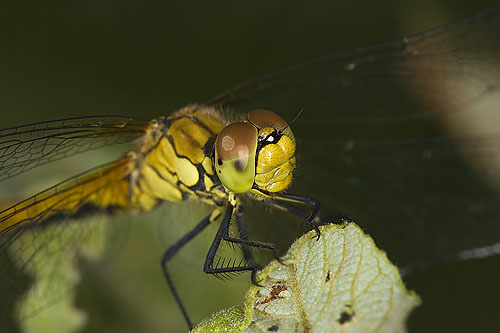
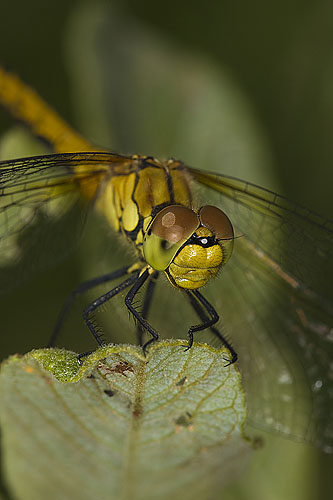
Common Darter (Sympetrum striolatum)
|
|
| July is also a month where many of the dragonflies start to emerge. The most abundant of which is the Common Darter. |
|
|
|
Common Darter (Sympetrum striolatum)
|
|
|
|
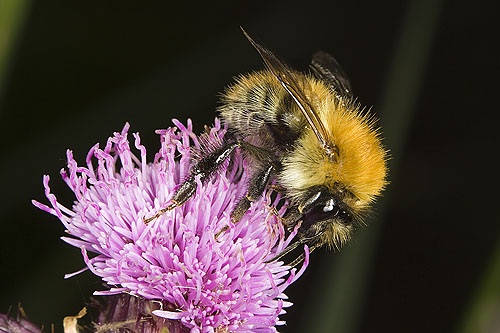
Carder Bee (Bombus pascuorum)
|
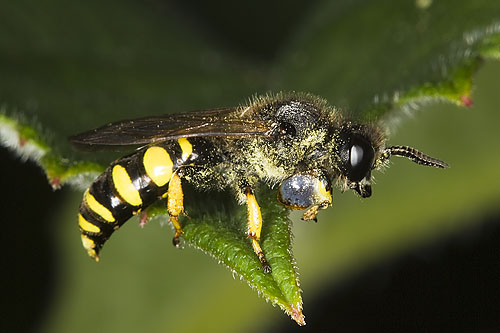
| The distended plate on the front foreleg of male Digger Wasps is used as secondary sexual organ that allows the male to get a better grip on the female during mating. |
|
|
|
male Slender-bodied Digger Wasp (Crabro cribrarius) - Anglesey, Wales
|
| There are 41 species of spider-hunting wasps in Britain. As their name suggests, they all actively hunt spiders which are paralysed and buried to act as a living larder for the wasp's larvae. |
|
|
|
Spider-hunting wasp (Anoplius infuscatus) with paralysed wolf spider (Xerolycosa miniata) - Anglesey, Wales
|
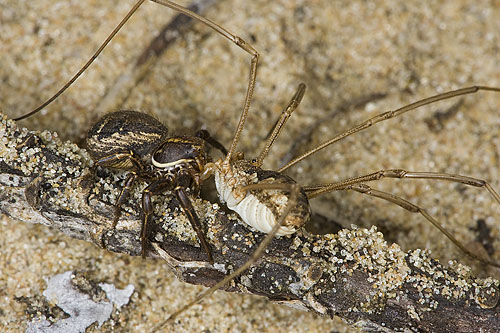
| In the dunes, I also witnessed a battle between two miniature predators. In this case, the spider emerged the victor. |
|
|
|
Unidentified spider (Xysticus sp.) killing a Common Harvestman (Phalangium opilio) - Anglesey, Wales
|
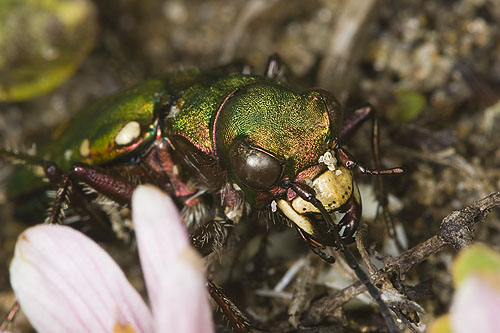
| One of Britain's most distinctive insects. The huge jaws on the Green Tiger Beetle make it a fearsome predator and it can deliver quite a painful bite if provoked. July is getting a bit late for Green Tiger Beetles. Their main period of adult activity is in the spring. |
|
|
|
Green Tiger Beetle (Cicindela campestris) - Anglesey, Wales
|
|
|
|
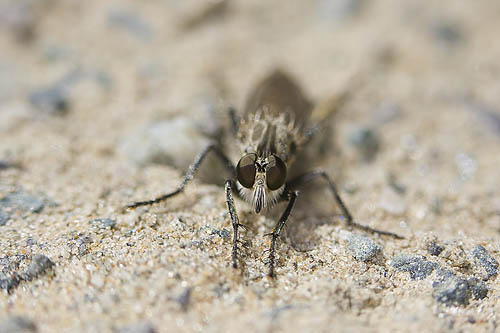
unidentified Robberfly (Asilidae sp.) probably a Fan-bristled Robberfly (Dysmachus trigonus) - Anglesey, Wales
|