- Home
- Workshops / Tours
- Diary / Blog
- Galleries
- Foreign Trips
- Tasmania 2016
- NE Queensland 2016
- Western Alps 2016
- NE Spain 2016
- Australia's Wet Tropics 2015
- Australia's Top End 2015
- SW Australia 2015
- Switzerland 2015
- Andalucia 2015
- Belize 2015
- Australia 2014
- Switzerland 2014
- Belize 2014
- Bahama Islands 2014
- Switzerland 2013
- Ecuador 2012-2013
- Florida 2011-2012
- Vancouver Island 2011
- Australia 2010
- Peru 2008
- Bulgaria 2007
- Lesvos 2006
- California 2006
- New Zealand 2005
- Extremadura 2005
- Goa, India 2004
- The Gambia 2003
New Zealand
5th November - 4th December 2005
Kaikoura Pelagic Boat Trips
Kaikoura is without question the best place I have ever been for seeing pelagic seabirds. I took three 3-hour trips organised by Oceanwings and ended up seeing a total of 7 species of albatross and 9 species of petrels/shearwaters...all at very close range!
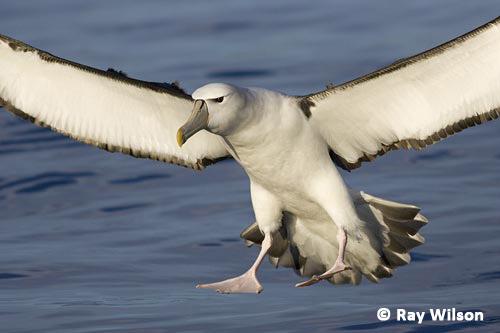
White-capped Albatross (Thalassarche [cauta] steadi)
The main advantage New Zealand has over all the other places I have done pelagic cruises from is the closeness of the continental shelf to the mainland. At Kaikoura, it is particularly close. Less than 1km, which is particularly welcome if you are not a good sailor! On two of the trips there was a 3m swell so it was a bit rough. I'm usually not too bad on a boat so long as I can see the horizon, but unfortunately you can't see the horizon when you are looking through the viewfinder of a camera so I spent most of my time feeling ill...
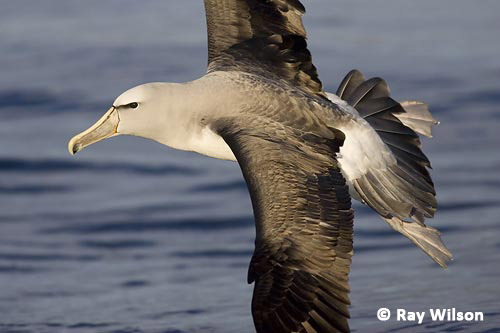
Salvin's Albatross (Thalassarche [cauta] salvini)
It is never easy taking photos of birds in flight, and especially so from a wildly rocking boat, so a high percentage of them were poorly composed. The photos you see here are some of the survivors out of the 1500 took on the 3 trips. I've only put one or two photos of each species on this page but more can be viewed for most species by clicking on the name captions.
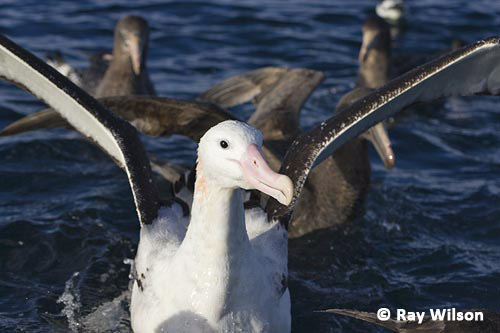
Gibson's Albatross (Diomedea [exulans] gibsoni)
One of the most commonly encountered albatrosses was Gibson's Albatross. This is a member of the Wandering Albatross complex and is absolutely huge! They have a wingspan of up to 3.5m (the largest of any living bird), measure over 1m from tail to beak and the largest males weigh in at over 11kg. These numbers sound impressive, but it's not until you see one only a few inches away from you that you realise just how big they really are.
And when they start fighting, everything gets out of their way...
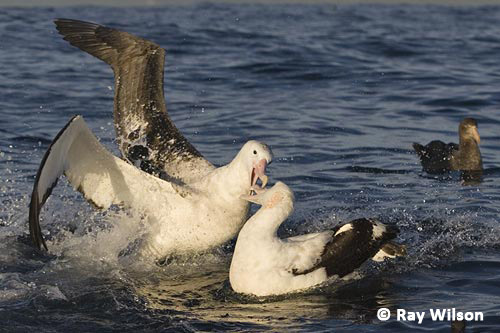
Gibson's Albatross (Diomedea [exulans] gibsoni)
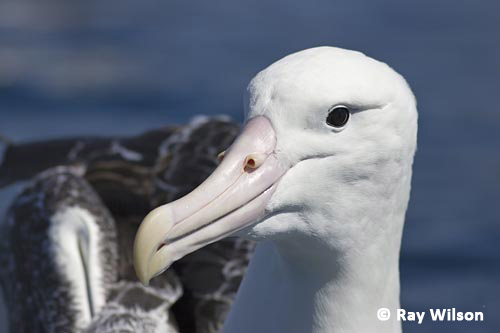
Southern Royal Albatross (Diomedea [epomophora] epomophora)
The main purpose of this trip, however, was to see the very rare King Shag. The world population of this bird is less than 500 individuals and all of them are found only on a few small colonies at the entrance to the Queen Charlotte Sound. They are incredibly sedentary for an ocean-living seabird, and are almost never seen outside of the Marlborough Sounds.
The non-birders in the group (almost everyone) were dropped off on Motuara Island for a walk, while myself and two others were taken out to see the King Shags. The seas were extremely rough out near their breeding cliffs (which were unoccupied since they are winter breeders), making it almost impossible to spot them on the water. Luckily, two individuals were kind enough to fly-by then land not far from the boat...
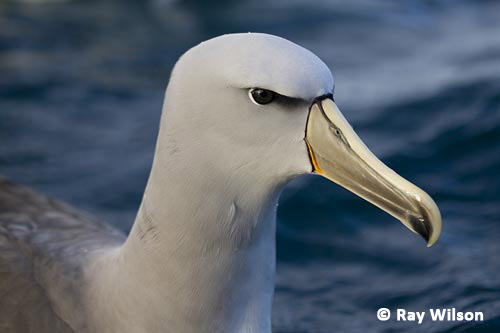
Salvin's Albatross (Thalassarche [cauta] salvini)
The Northern Royal Albatross is the only species which nests relatively locally: there is a small colony at Taiaroa Head, near Dunedin. The others all nest on subantarctic islands.
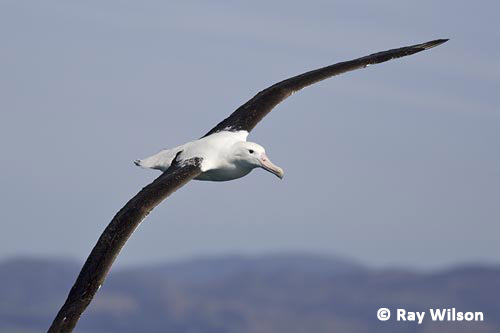
Northern Royal Albatross (Diomedea [epomophora] sanfordi)
The albatross I saw least frequently was the Black-browed. Only 2 immatures...
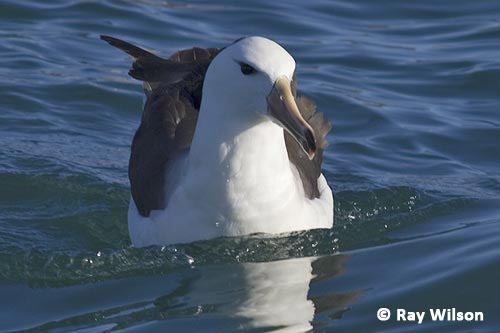
Immature Black-browed Albatross (Thalassarche melanophrys)
Northern Giant Petrels were numerous, and spent a large amount of time engaged in violent squabbles...
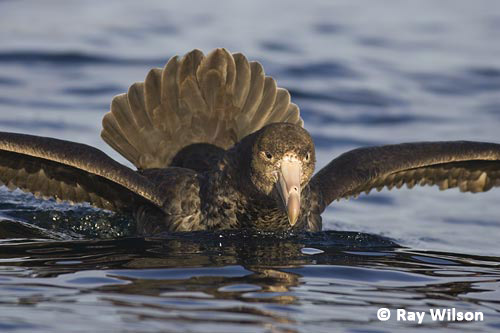
Northern Giant Petrel (Macronectes halli)
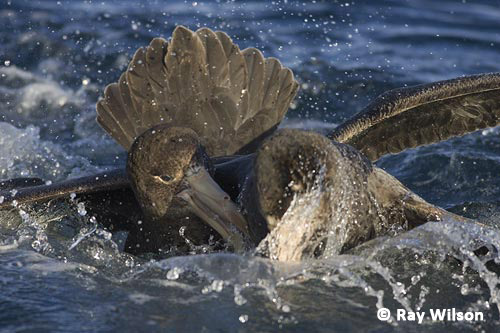
Northern Giant Petrel (Macronectes halli)
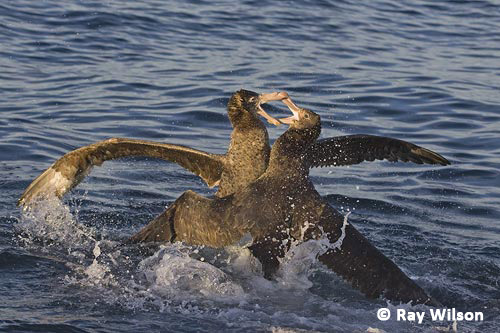
Northern Giant Petrel (Macronectes halli)
Southern Giant Petrel was much rarer and I only saw it on one of the trips. It is quite difficult to differentiate Northern Giant from the dark morph of Southern. The main difference is the colour of the bill: Southern has a green tip to the bill with no dark markings, whereas the Northern has a reddish tip. Young immatures that have not developed the adult bill colour cannot be safely identified.
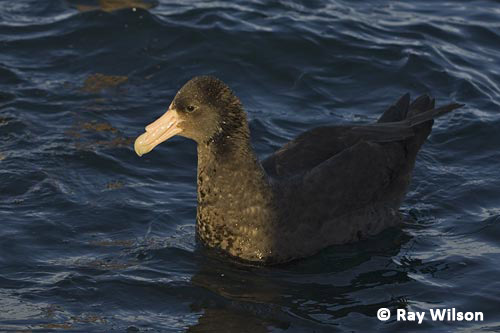
Southern Giant Petrel (Macronectes gigantus)
The commonest of the petrels was the Westland Petrel. Endemic to New Zealand, they breed on the west coast of South Island during the winter and have a population of only about 20,000 individuals.
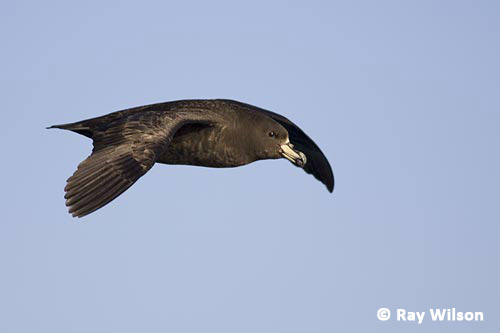
Westland Petrel (Procellaria westlandica)
The much smaller Cape Petrel was also quite common...
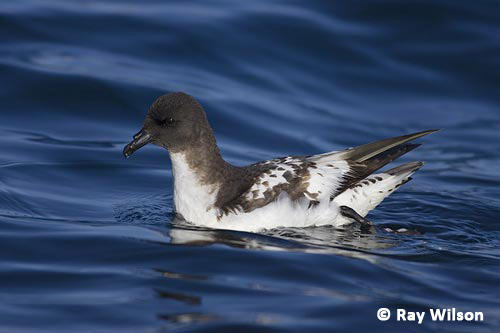
Cape Petrel (Daption capensis)
Only a few individuals of each the other species were seen...
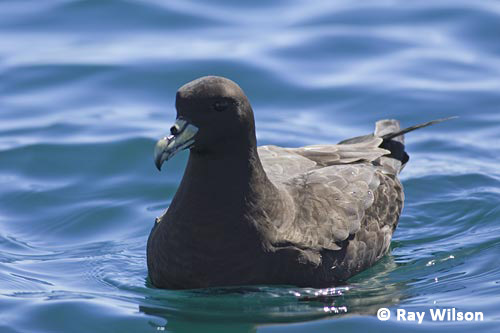
White-chinned Petrel (Procellaria aequinoctialis)
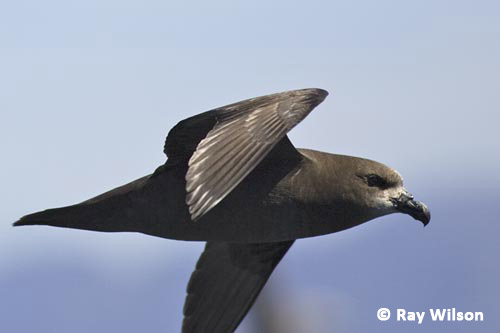
Great-winged Petrel (Pterodroma macroptera) - also called the Grey-faced Petrel in New Zealand
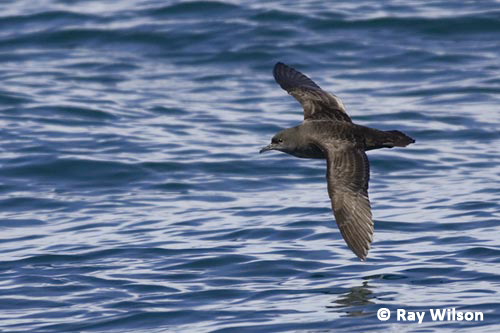
Short-tailed Shearwater (Puffinus tenuirostris)
Hutton's Shearwaters were flying past in quite large numbers, but none came close to the boat. The Little Shearwater shown below was among them.
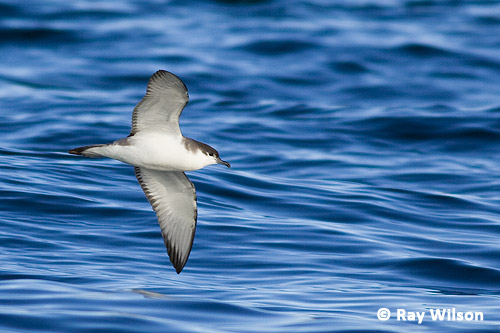
Little Shearwater (Puffinus assimilis haurakiensis)
| Queen Charlotte Sound |  |
New Zealand map |  |
Kaikoura headland & Whale Watching |






Ray Wilson owns the copyright of all images on this site.
They may not be used or copied in any form without prior written permission.
raywilsonphotography@googlemail.com