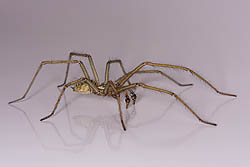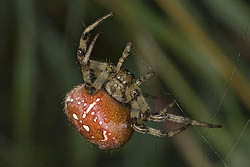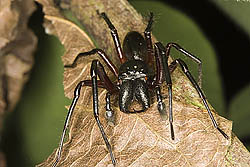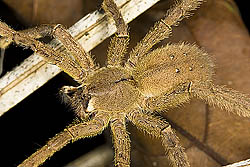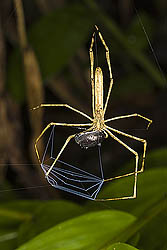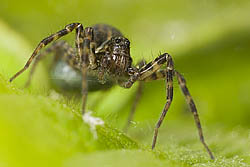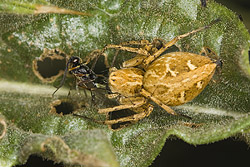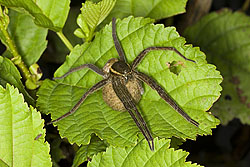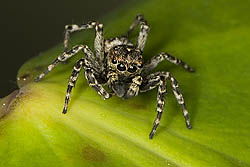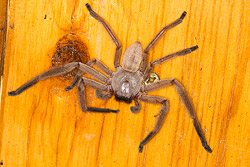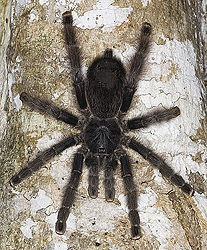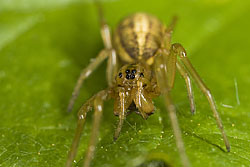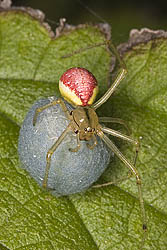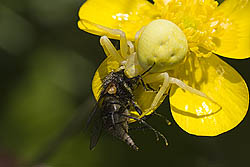
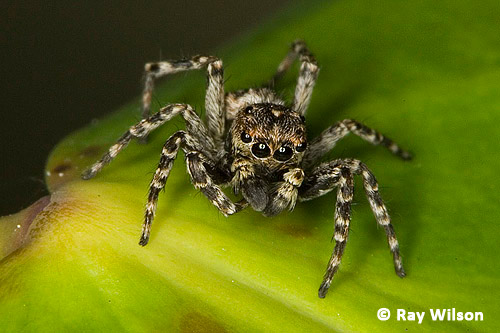
Although many people hold an irrational fear of spiders, the truth is that almost all of the spiders naturally present in Britain are incapable of piercing the human skin and even those that can require serious provocation before they will sink their fangs into you. Only two British species require care if being handled: the water spider (Argyroneta aquatica) and Steatoda nobilis, both of which will deliver a bite equivalent to a bee sting. Worldwide, there are only about a dozen species capable of causing serious symptoms if you are bitten.
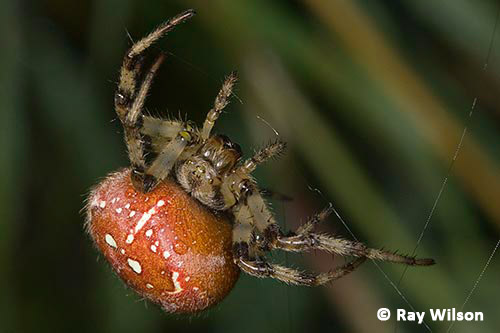
Spiders are an enormously beneficial group whose predatory habits are important in keeping insect numbers in check. For example, a typical, undisturbed area of English grassland may hold as many as 2 million spiders per acre. With each of these spiders eating one insect per day this equates to an enormous number over the course of a year, and doesn't even take into account the large numbers of small insects, such as aphids, that may be caught in the webs of larger spiders but are too small for the spider to be bothered eating.
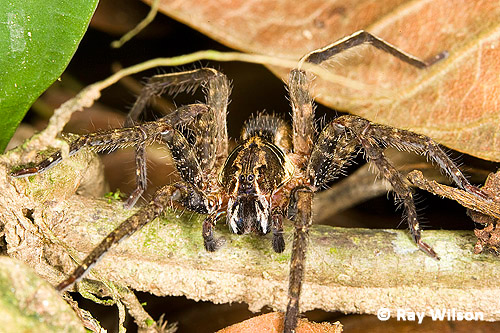
Only about 1% of the 40000 species of the known spider species occur in Britain.










Ray Wilson owns the copyright of all images on this site.
They may not be used or copied in any form without prior written permission.
raywilsonphotography@googlemail.com